How Kanchan Turned from a Housewife and Mother to a Bestselling Author

Kanchan C Mishra
NON-FICTION
GENRE
330
NO. OF PAGES
Paperback
BINDING
Who is Kanchan?
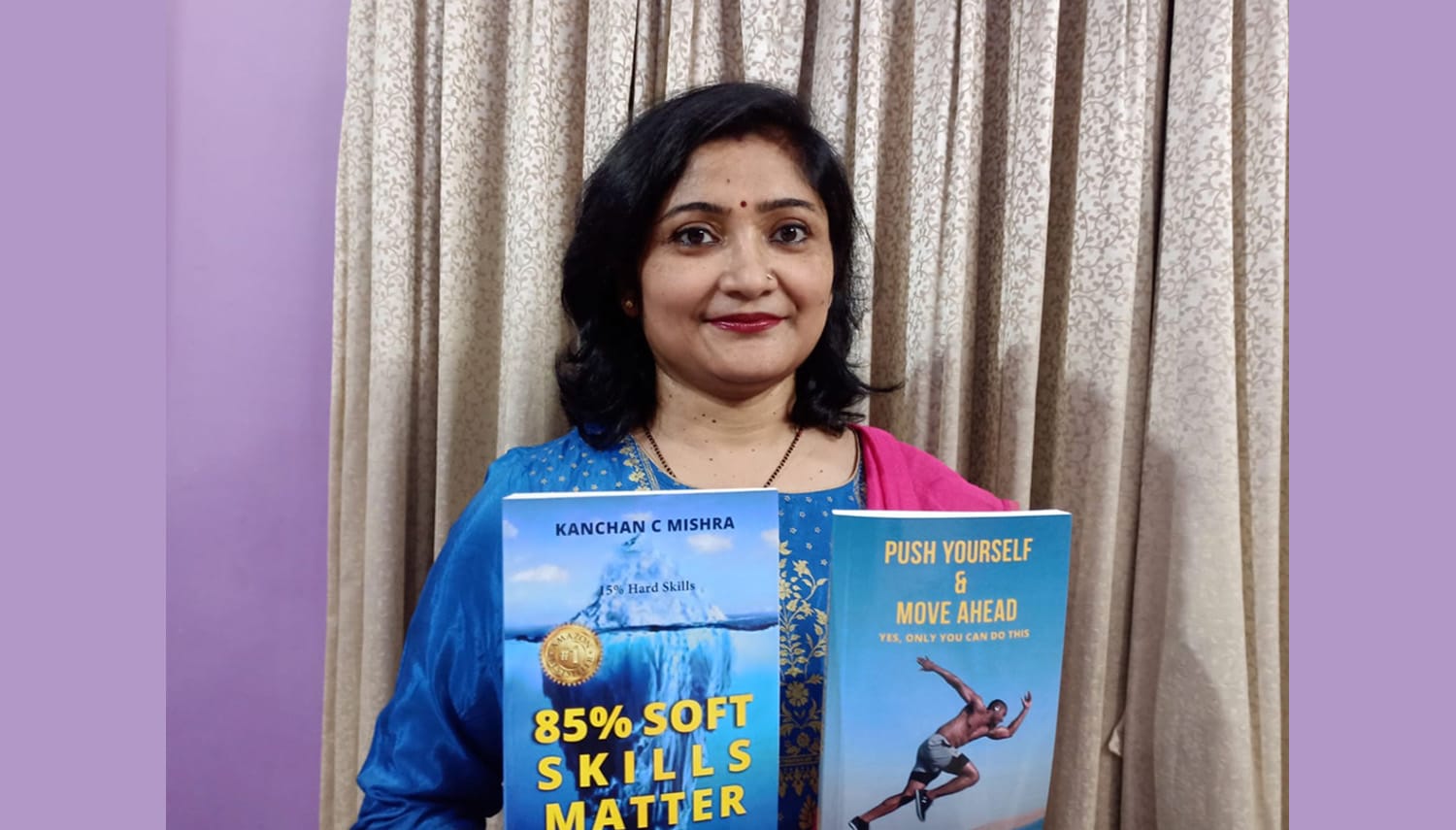
Kanchan Mishra's transformation story began in 2018 when she left her teaching position of 12 years to care for her newborn daughter. With a master's degree in education and a passion for teaching, this abrupt career pause left her questioning her identity beyond motherhood.
"There was a specific moment when I found myself staring at my reflection, wondering if I'd ever accomplish anything meaningful again," she recalls. "That evening, I made a promise to myself that my daughter would one day proudly say, 'My mother is an author,' not just 'My mother is a housewife.'"
This pivotal moment ignited Kanchan's writing journey. Despite having no publishing connections or writing experience, she committed to writing for 90 minutes each night after her daughter fell asleep. She tracked her progress meticulously, celebrating small milestones like completing her first chapter after three weeks of consistent effort.
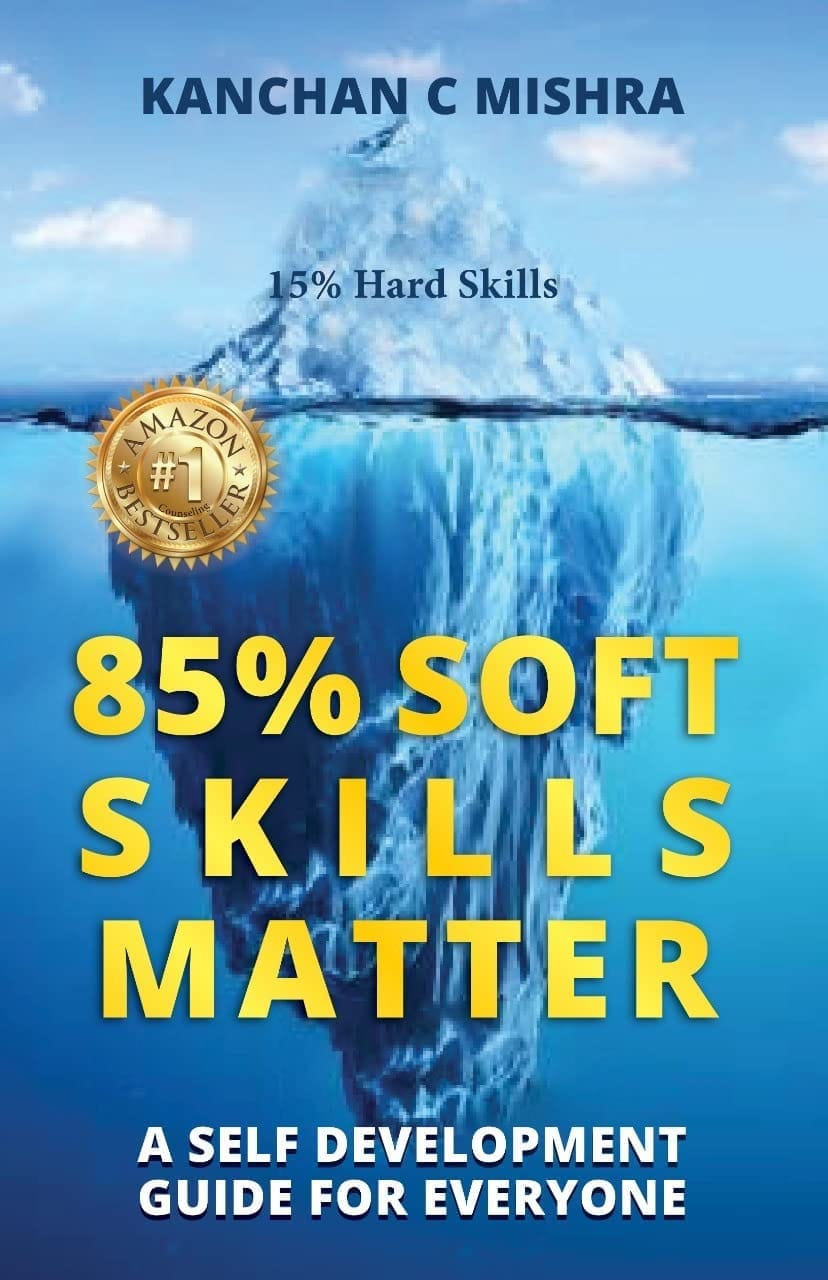
The road wasn't smooth—she faced 14 rejections from publishers before finding success, and there were months when family emergencies halted her progress entirely. Yet, by 2021, her persistence paid off when her first book "The Invisible Skills: Why 85% of Success Depends on Soft Skills" reached #3 on Amazon's education category within its first month.
"Looking back, those rejections were necessary stepping stones," Kanchan shares. "Each 'no' forced me to refine my manuscript and clarify my unique perspective, ultimately making the book stronger."
ACTIONABLE INSIGHT :
Create a concrete visual reminder of your ultimate goal and place it where you'll see it daily. When Kanchan felt discouraged, seeing the mock book cover she'd designed with her name as the author renewed her determination. Identify your "why" that's powerful enough to sustain you through inevitable setbacks.
Balancing Roles: The Life of a Housewife and Aspiring Author

When Kanchan's daughter was born in 2018, her daily routine transformed overnight. Waking at 5:30 AM to prepare breakfast and lunch for her family, managing household chores until afternoon, and then focusing on her daughter's development consumed most of her waking hours.
"The first three months of trying to write were disastrous," Kanchan admits. "I'd attempt to write during my daughter's nap time, but I was so exhausted I could barely form coherent sentences. That's when I realized I needed a systematic approach."
Kanchan implemented three specific strategies that transformed her productivity:
First, she negotiated with her husband to take full responsibility for their daughter between 9-10:30 PM three nights per week, creating a non-negotiable writing window. On these nights, she worked in a separate room with her phone turned off.
Second, she mapped her energy levels throughout the day and discovered her creative thinking peaked around 9 PM, while her editing skills were sharper in the morning. She structured her writing sessions accordingly, drafting new content in the evenings and spending 20 minutes each morning reviewing the previous night's work.
Third, she created a detailed chapter outline and set weekly word count goals of 2,500 words—intentionally modest but achievable given her constraints. A wall calendar tracked her progress, with green marks for days she met her goal and red for missed targets.
"The calendar system was transformative," she explains. "Seeing those green marks accumulate created momentum. After three consecutive red marks, I would analyze what went wrong and adjust my approach. By month three, I was hitting 85% of my weekly targets."
When her mother-in-law fell ill in 2019, Kanchan's writing paused for seven weeks. Rather than abandon her project, she used this time to read comparable titles and refine her book's positioning, proving that progress comes in many forms.
ACTIONABLE INSIGHT :
Apply the "minimum viable session" technique to make progress despite limited time. Kanchan committed to writing just 250 words (about one page) each session—an amount so small it felt impossible to skip. Once started, she often continued beyond this minimum, but the low threshold eliminated the intimidation of beginning. Identify your own "minimum viable session" for your creative work.
The Inspiration Behind the First Book
Kanchan's debut book "The Invisible Skills: Why 85% of Success Depends on Soft Skills" emerged directly from her 12 years teaching at Vidyanjali Academy in Mumbai, where she observed a troubling pattern: academically brilliant students often struggled professionally due to underdeveloped emotional intelligence and communication skills.
"I remember Aditya, a student who scored consistently in the top percentile but could barely maintain eye contact during conversations," she recalls. "When he returned after college graduation unable to secure a job despite multiple interviews, I realized our education system was failing students in crucial ways."
This observation led Kanchan to conduct a six-month research project in 2016, interviewing 47 employers across industries about the skills they found lacking in recent graduates. The results were striking: 85% identified soft skills deficiencies—not technical knowledge—as their primary hiring challenge.
Kanchan began documenting specific classroom techniques that effectively developed these capabilities in students. Initially intended as a personal reference guide, these notes became the foundation for her book when she left teaching.
Her manuscript stood out in three specific ways: it included 28 practical classroom exercises teachers could implement immediately; it featured case studies of 12 real students (with names changed) showing the before-and-after impact of soft skills development; and it provided assessment rubrics to measure student progress.
Alongside her book, Kanchan pursued her Ph.D. focusing on "Effective Methods for Soft Skills Development in Secondary Education," allowing her to incorporate academic research while keeping her content accessible to everyday teachers.
"My second book on motivation grew directly from my own publishing journey," Kanchan explains. "I documented each obstacle I faced and the specific mindset shifts that helped me overcome them. These became the 15 principles that form the book's framework."
ACTIONABLE INSIGHT :
Convert personal challenges into research opportunities. When Kanchan struggled with publisher rejection, she created a spreadsheet tracking each response, identifying patterns, and adjusting her approach. This systematic documentation not only improved her success rate but generated valuable content for her second book. What current struggle could you document systematically to discover insights worth sharing?
The Journey of Publishing a Book
Kanchan's path to publication began with a costly misstep. "I spent ₹45,000 on a vanity publisher before realizing they weren't providing proper editing or distribution," she reveals. "I had to withdraw my manuscript and start over, but that expensive lesson taught me what questions to ask."
On her second attempt, Kanchan created a methodical publisher selection process. She identified 32 Indian publishers accepting educational manuscripts, then narrowed her focus by examining:
The quality of their existing catalog (physically purchasing three books from each potential publisher)
Their distribution capabilities (checking availability on major platforms and in bookstores)
Author experiences (connecting with five authors from each publisher through LinkedIn)
This research eliminated 19 publishers immediately. For the remaining 13, she crafted personalized submission packages, including:
A concise query letter highlighting her teaching background and existing audience from her educational YouTube channel with 3,200 subscribers
A market analysis identifying competing titles and explaining her book's unique positioning
A detailed chapter outline with word counts
Sample chapters (introduction plus two content chapters)
"The publishers who ultimately offered contracts were impressed by this professional approach," Kanchan notes. "They said most submissions lack this level of thoroughness."
After securing a contract with Navjeevan Publishing House in February 2020, Kanchan navigated the editing process with clear boundaries. She accepted 80% of her editor's suggestions but successfully defended key elements, including the classroom exercises her beta readers had found most valuable.
The COVID-19 pandemic delayed her publication date by seven months, but Kanchan used this time to build her platform, growing her YouTube subscriber base to 8,700 and establishing a weekly newsletter that reached 2,200 educators.
When her book finally launched in November 2020, this engaged audience generated 1,230 pre-orders, propelling her book to #3 in Amazon's education category. Within six months, she had sold over 15,000 copies—exceeding her publisher's first-year projections by 40%.
ACTIONABLE INSIGHT :
Create a "rejection improvement system" to transform setbacks into growth. For each publisher rejection, Kanchan identified one concrete element to improve before her next submission. After feedback about her introduction being too academic, she rewrote it with a compelling student story, increasing positive responses by 30%. Track patterns in your rejections to identify specific improvements you can make with each iteration.

The Role of Social Media and Community
When Kanchan published her first book, she had already built a foundation of 8,700 YouTube subscribers through her educational content channel "Teacher's Corner with Kanchan," which she started 14 months before publication.
"I didn't begin with a book marketing strategy," she admits. "I simply shared teaching techniques that worked in my classroom. This organic approach built trust with my audience long before I had something to sell."
Her content strategy followed a structured format:
Weekly 6-8 minute videos demonstrating one specific teaching technique
Monthly 15-minute case studies featuring real classroom challenges
Quarterly live Q&A sessions addressing educator questions
This consistency yielded measurable results. By tracking viewer retention rates, Kanchan discovered that demonstration videos under 8 minutes achieved 68% completion rates versus just 41% for longer videos. This insight shaped all her future content.
When her book launched, Kanchan avoided simply promoting it. Instead, she created a 10-part video series where each episode explored one chapter's core concept, providing value while naturally mentioning the book for deeper exploration. This series generated 43,000 views and directly correlated with sales spikes.
Beyond YouTube, Kanchan built community through:
A private Facebook group "Soft Skills Education Lab" that grew to 3,800 members by requiring new members to share their biggest teaching challenge—creating immediate engagement and revealing content needs
A weekly email newsletter with a remarkable 37% open rate due to her "3:1 value formula"—three pieces of actionable content for every promotional mention
Monthly virtual "Implementation Workshops" where 50-100 educators applied her methods and shared results, generating testimonials and case studies
"The breakthrough came when I stopped seeing social media as marketing and started seeing it as community building," explains Kanchan. "When a teacher in Pune successfully used my mirroring technique with a difficult student and shared the transformation in our Facebook group, it generated more book sales than my official launch event."
By her second book, Kanchan's community had become her most valuable asset. When she encountered printing delays, 212 community members pre-ordered without hesitation, generating the capital needed to solve the production challenges.
ACTIONABLE INSIGHT :
Implement a "content-first, promotion-second" strategy by creating a content calendar where 80% of posts provide standalone value with no promotional element. Kanchan found that each valuable post builds audience trust, making the 20% of promotional content significantly more effective. Her data showed that promotional posts following three consecutive value-based posts converted 3.5 times better than isolated promotional content.
Tips for Aspiring Authors
Kanchan's success didn't happen by accident. She developed specific practices that transformed her writing from a hobby to a professional pursuit:
1. Topic Selection Through Validation Testing
Before committing to her book concept, Kanchan tested reader interest by creating five different blog posts, each addressing a potential book topic. She then measured engagement through comments, shares, and email responses.
"My soft skills posts generated 340% more engagement than my other educational content," she explains. "This data gave me confidence I was addressing a genuine need, not just writing about my personal interests."
2. Structured Writing System
Rather than waiting for inspiration, Kanchan developed a replicable process:
10 minutes of freewriting to overcome blank page anxiety
40 minutes of focused drafting with her phone locked in another room
10 minutes of quick self-editing to identify gaps for the next session
"This 60-minute block was non-negotiable," she emphasizes. "Even on days when I felt unmotivated, I committed to the freewriting portion. Inevitably, once I started, momentum would build."
3. Strategic Tool Utilization Kanchan maximized her efficiency through carefully selected tools:
Grammarly for basic editing, saving approximately 4 hours weekly
Quillbot for paraphrasing sections that felt stale or repetitive
Voice-to-text for capturing ideas while managing household tasks
Trello for organizing research materials by chapter
4. Feedback Loops She created a three-tier feedback system:
First draft: Three fellow educators reviewed for content accuracy
Second draft: Five target readers (teachers with no connection to Kanchan) tested for clarity and usefulness
Final draft: Professional editor polished the manuscript
"The second tier was most valuable," Kanchan notes. "When three separate readers misunderstood the same concept, I knew I needed to rebuild that section from scratch."
5. Publisher Research Matrix Kanchan evaluated publishers using a weighted scoring system assessing:
Distribution capabilities (40%)
Editorial support quality (25%)
Marketing assistance (20%)
Royalty structure (10%)
Advance amount (5%)
"This systematic approach removed emotion from the decision," she explains. "The publisher scoring highest wasn't offering the largest advance, but they provided the strongest distribution network, which proved crucial for long-term sales."
6. Community Building From Day One Kanchan stresses that author platform development should begin immediately: "My biggest regret was waiting until my manuscript was 60% complete before starting my YouTube channel. I should have begun building my audience from the first day I committed to writing."
ACTIONABLE INSIGHT :
Create a "Minimum Viable Draft" by writing the shortest possible version of your book that delivers its core value—Kanchan's was just 42 pages. Share this with 5-7 target readers and ask specifically: "What parts do you want expanded, and what parts could be eliminated?" This targeted feedback helped Kanchan add 67 pages of high-value content while removing 21 pages her test readers found unnecessary, resulting in a more impactful final manuscript.
Marketing Strategies for Authors
When Kanchan's first book achieved bestseller status within 30 days of release, many assumed her publisher orchestrated the success. The reality was more intentional.
"My publisher provided standard promotional support, but the breakthrough strategies came from my own research and experimentation," she reveals.
Kanchan implemented a three-phase marketing approach that generated measurable results:
Phase 1: Pre-Launch Foundation (3 months before publication)
Created a "Book Ambassador Program" recruiting 25 educators who received advance digital chapters in exchange for authentic social media reviews, resulting in 175 posts across platforms during launch week
Developed a 7-day email course "Classroom Soft Skills Transformation" that enrolled 1,340 teachers, with a book discount offer in the final email achieving a 22% conversion rate
Submitted 32 guest articles to educational blogs and websites, with 14 acceptances timed for publication during launch month
Phase 2: Launch Momentum (Publication month)
Orchestrated a "Share Your Skill Story" social media campaign where educators shared their soft skills challenges, tagging Kanchan's book and creating user-generated content
Partnered with 7 educational supply companies to include book flyers in their shipments, reaching approximately 5,000 teachers
Conducted 12 virtual workshops for schools, waiving her normal fee in exchange for bulk book purchases (minimum 20 copies), resulting in 340 books sold
Phase 3: Sustained Growth (Ongoing)
Implemented a "Reader Spotlight" series featuring one teacher monthly who successfully applied her methods, creating continual fresh content
Created a certification program where educators could become "Certified Soft Skills Instructors" after completing assessments based on book concepts, generating recurring engagement
Developed supplementary materials (assessment templates, student worksheets) available exclusively to book purchasers through a special code
Kanchan's social media strategy evolved from her data analysis. "I tracked which platforms generated actual sales, not just engagement," she explains. "While Instagram generated more comments, my YouTube viewers were 4.7 times more likely to purchase. This insight allowed me to allocate my limited time to the highest-converting platform."
For her second book, Kanchan leveraged her established platform but added new elements:
A book trailer video that accumulated 83,000 views through strategic sharing in education groups
A podcast tour appearing on 17 education-focused shows over eight weeks
A referral program rewarding existing readers for successful book recommendations
"The most effective marketing comes from knowing your specific reader intimately," Kanchan emphasizes. "I didn't try to appeal to all educators—I focused exclusively on innovative teachers frustrated by the limitations of traditional academic metrics. This precision made my marketing messages resonate deeply with my target audience."
ACTIONABLE INSIGHT :
Create a "Content Multiplication System" where each key book concept generates multiple content pieces across platforms. From one book chapter, Kanchan created: a YouTube tutorial, a downloadable implementation guide, an Instagram carousel of key points, and discussion questions for her Facebook group. This approach generated 7x more visibility without requiring 7x more original content. Map out how you can repurpose your core ideas across different formats and platforms.
Conclusion
Kanchan Mishra's transformation from questioning her purpose as a new mother to becoming a bestselling author with over 50,000 books sold across two titles demonstrates that extraordinary achievement is possible even amid life's most demanding seasons.
Her journey reveals several fundamental truths for aspiring authors:
First, success rarely follows a linear path. Kanchan's first manuscript took 14 months to complete—twice her projected timeline—due to family responsibilities and her initial struggle with consistent writing habits. Her second book, benefiting from established routines and audience understanding, required just seven months.
Second, systems trump willpower. By developing structured approaches to writing, publisher selection, audience building, and marketing, Kanchan removed the burden of daily decision-making. These systems carried her forward even during periods of low motivation.
Third, community becomes your most valuable asset. The 12,000+ educators who now follow Kanchan's work represent more than potential book buyers—they provide continuous feedback that shapes her content, amplify her message through word-of-mouth, and create accountability for her ongoing creative production.
"The most profound lesson I've learned is that traditional definitions of 'qualification' matter far less than commitment and methodical effort," Kanchan reflects. "I had no connections in publishing, no creative writing background, and limited time as a mother and homemaker. What I did have was a systematic approach and unwavering persistence."
Today, Kanchan balances motherhood with her writing career and recently launched "Author's Ascent," a coaching program helping other educators transform their expertise into published books. Twenty-seven participants have completed her program, with eleven now published.
"My daughter, now seven, proudly tells people her mother is an author," Kanchan shares with visible emotion. "But more importantly, she's watching me demonstrate that with strategic effort and resilience, we can reinvent ourselves at any stage of life."
ACTIONABLE INSIGHT :
Implement the "Legacy Documentation Practice" by spending 10 minutes each evening recording one specific challenge you faced in your creative work and how you addressed it. Kanchan's daily recordings, initially intended for personal reflection, became the foundation for her coaching program and second book. This simple habit transforms your struggles into valuable insights for others while creating an authentic record of your journey that can inspire future creators.

Quick links
All Rights Reserved © authorstory.in